
Plates - NIJ 07
NIJ 0101.07 hard armor plates represent the latest generation of rifle-threat protection evaluated under the updated National Institute of Justice body armor standard. Slate Solutions develops high-performing hard armor solutions for law enforcement, military, federal, and other professional applications, engineered to balance ballistic performance, weight, thickness, durability, and mobility.
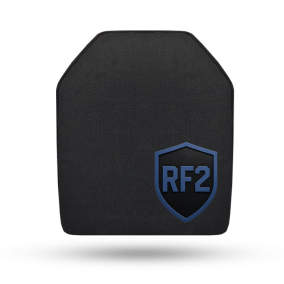
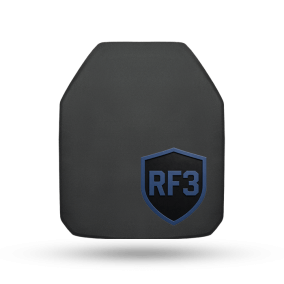
NIJ 0101.07 introduces RF1, RF2, and RF3 rifle-threat classifications as part of the updated standard. Slate Solutions' NIJ 0101.07 hard armor portfolio includes solutions across these evolving protection requirements, with RF2 and RF3 options currently available and an RF1 solution undergoing the NIJ certification process.
Not sure how the updated classifications compare with the previous standard? Learn more about the transition in our NIJ 0101.06 vs. NIJ 0101.07 guide.
What are NIJ 0101.07 hard armor plates?
+NIJ 0101.07 hard armor plates are rifle-resistant body armor evaluated under the National Institute of Justice’s updated ballistic-resistant body armor standard. The standard introduces updated testing requirements and uses RF1, RF2, and RF3 classifications for rifle-threat protection.
These classifications help agencies and procurement professionals evaluate armor based on defined ballistic threats and testing requirements when selecting protection for specific operational needs.
What do RF1, RF2, and RF3 mean under NIJ 0101.07?
+RF1, RF2, and RF3 are the rifle-threat classifications used under NIJ Standard 0101.07. Each classification establishes specific ballistic test threats and performance requirements, with RF2 adding an additional rifle threat beyond RF1 and RF3 addressing armor-piercing rifle threats.
The updated classifications should not be treated as simple name replacements for NIJ 0101.06 Level III, III+, and IV because NIJ 0101.07 also introduces changes to testing and evaluation requirements.
What is the difference between NIJ 0101.06 and NIJ 0101.07 armor plates?
+NIJ 0101.07 updates how ballistic-resistant body armor is classified, tested, and evaluated compared with NIJ 0101.06. For hard armor, one of the most visible changes is the introduction of RF1, RF2, and RF3 rifle-threat classifications.
The updated standard also incorporates changes to testing methodologies and the overall standards framework. Agencies should consider the applicable NIJ standard, threat protection, armor configuration, weight, fit, and operational requirements when evaluating armor.
Learn more about the changes in our NIJ 0101.06 vs. NIJ 0101.07 guide.
FAQs
What threats are tested under NIJ 0101.07 RF2?
+NIJ 0101.07 RF2 includes the rifle threats evaluated under RF1 and adds testing against the 5.56×45mm M855 projectile. This provides an additional level of rifle-threat protection for agencies and professionals whose operational requirements include this threat.
When selecting RF2 armor, agencies should evaluate the complete certified armor model, configuration, weight, thickness, and intended application in addition to the threat classification.
What threats are tested under NIJ 0101.07 RF3?
+NIJ 0101.07 RF3 is the armor-piercing rifle-threat classification and includes testing against the .30-06 M2 armor-piercing (AP) projectile.
RF3 armor is intended for applications requiring protection against this higher-level rifle threat. Agencies should consider their anticipated threat environment, operational requirements, armor configuration, weight, and mobility when determining whether RF3 protection is appropriate.
How should agencies choose between RF2 and RF3 armor plates?
+The appropriate protection level should be based on an agency’s threat assessment, mission requirements, operating environment, and equipment needs. RF2 and RF3 armor are designed around different ballistic test threats, so a higher classification is not automatically the best choice for every application.
Agencies should consider ballistic protection alongside factors such as plate weight, thickness, size, cut, stand-alone or ICW configuration, mobility, and compatibility with the selected armor system. Slate Solutions can help agencies evaluate hard armor options based on their specific operational requirements.